Aller au contenu principal
I.ON
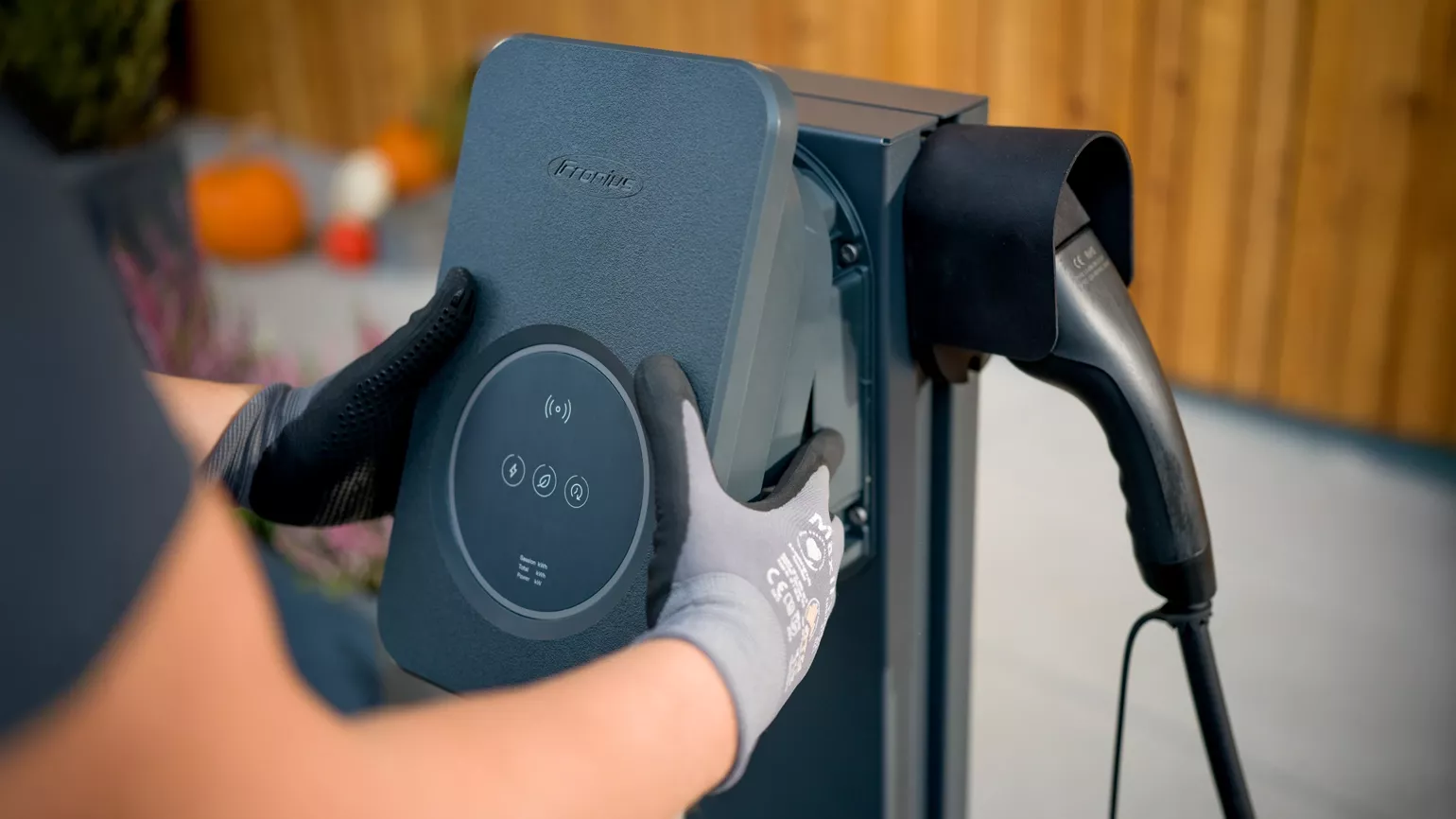
EV charging station installed by I.ON

EV charging stations.

11 to 22 kW residential and commercial chargers, controlled by your solar production. Smart charging, dynamic power management and OCPP supervision. Installed by our in-house team in the cantons of Vaud, Geneva, Fribourg and Neuchâtel.

  • Étude offerte sur site
  • Devis détaillé sous 7 jours
  • Subventions cantonales gérées
  • Sans sous-traitance

Why us

A charger is simple. Installing it properly, much less so.

Buying an electric car almost always raises the same question: what about charging at home? Many homeowners in Western Switzerland underestimate this when ordering their vehicle and then improvise a few weeks later. We have been installing chargers since 2018 and have seen every situation: panels that cannot handle the load, improvised cable runs, neighbour disputes over hot cables, and Asian-branded chargers bought online with no after-sales support.

Our approach is resolutely pragmatic: we look at your panel before recommending a model, we submit the grid operator notifications on your behalf, and we only install brands with Swiss after-sales representation. A charger is a 10 to 15 year investment — it deserves a professional installation.

+250
Chargers installed
From 2 wks
Typical lead time
95 %
Cases at 11 kW
10 years
Service life

Two segments

Residential and company fleets.

Residential

An 11 kW wall-mounted charger, installed in the garage or on the façade, coupled to your solar installation. Priority charging on your solar surplus to minimise running costs.

  • · Three-phase 11 kW charger (most common)
  • · Standard European Type 2 connector
  • · Mobile app to schedule charging
  • · From 1'800 CHF all-in

Fleets & commercial

Multi-charger sites (4 to 30 charge points) with dynamic power management, OCPP supervision, per-user billing, RFID access control.

  • · 11, 22 or 50 kW DC chargers
  • · Dynamic power management (load balancing)
  • · OCPP 1.6 or 2.0 supervision
  • · Billing and reporting via cloud platform

Our approach

From technical visit to commissioning.

  1. Technical visit

    Analysis of your electrical panel, connection point and cable run distance to the vehicle. Verification of available capacity and compatibility with any existing solar installation.

  2. Charger selection

    Model recommendation (Fronius Wattpilot Flex 11, Easee Charge Core, KEBA P30, EVBox Elvi) based on your needs: solar coupling, backup function, multiple vehicles, home automation integration. All our chargers are OCPP 1.6 or 2.0.

  3. Grid operator notification

    We submit the notification to the grid operator (Romande Energie, SIG, Groupe E, municipal utilities). Processing time 2–4 weeks. No steps required from you.

  4. Installation and commissioning

    Half a day to a full day depending on cable run complexity. Includes mounting, wiring, earthing, mobile app setup and function test.

  5. Support and warranty

    Charger covered by 3 to 5 year manufacturer warranty depending on the model. Our after-sales support is included during the first year. Monitoring is done via your app with no subscription.

Indicative pricing

How much does a charger cost in 2026?

The prices below are field ranges for residential projects in Western Switzerland. The detailed quote depends on the cable run length required, the panel rating and the grid operator notification process.

ConfigurationRangeDetail
11 kW residential, standard connection (5–15 m)1'800 – 3'200 CHFThe majority of single-family home cases.
11 kW with long run or difficult routing2'500 – 4'000 CHFOlder building, distance >20 m, surface conduit on façade.
22 kW three-phase2'400 – 3'800 CHFFor vehicles compatible with 22 kW (Renault Zoé, Megane E-Tech).
Electrical panel upgrade required+1'200 – 3'000 CHFPre-2000 panel with insufficient capacity.
Multi-charger fleet site (4–12 points)On requestWith dynamic load balancing and OCPP supervision.

Prices exclude options: RFID badge, premium cloud platform subscription, advanced dynamic solar management.

Who is it for

Four installation profiles.

Single-family home, 1 vehicle

Wall-mounted 11 kW charger in the garage or on the façade. Overnight charging is sufficient (full charge in 6–8 hours). Simple coupling to an existing solar installation via a smart meter.

Home with solar panels

Smart charger configured to charge preferentially on solar surplus. Marginal cost of daytime charging close to zero. Strong return on investment for the charger.

Co-ownership / apartment block

Shared infrastructure with conduit ready for 100 % of spaces, initial equipment for 25–40 %. Collective load balancing to avoid oversizing the grid connection.

SME or company fleet

Multi-charger sites with 4 to 30 points, centralised OCPP supervision, per-user billing, RFID access control. Collective solar coupling possible.

Grants and tax

What is subsidised, and what is not.

No dedicated cantonal grant for chargers

Unlike heat pumps or solar, residential EV chargers do not benefit from a stable cantonal grant in Western Switzerland in 2026. A few municipalities have had occasional programmes (Geneva in particular).

Tax deduction

Installing a charger is part of the energy transition of the home and remains deductible from taxable income as an energy investment, provided it is installed by a professional and invoiced separately.

Solar coupling: combined grants

When the charger is part of a broader project (solar + charger + heat pump), it can be included in a global renovation file that unlocks additional cantonal bonuses on the other items.

Guarantees

What we guarantee, in writing.

Charger: 3 to 5 years manufacturer warranty
Depending on brand (Fronius, Easee, KEBA, EVBox). Standard exchange in the event of defect.
Installation: 2 years parts and labour
Our warranty on the installation work, separate from the equipment warranty.
OIBT (Swiss electrical code) compliance
Compliance certificate handed over at delivery. Installation in conformity with applicable Swiss electrical standards.
Cloud platform: no subscription in year 1
Monitoring included. Access to charging statistics and operating costs.

Frequently asked questions

Everything about EV charging.

What output do I need for a residential charger?

+

An 11 kW charger (three-phase 16 A) covers 95 % of residential needs: it charges an electric car from 0 to 100 % in 6 to 8 hours, i.e. one full night. A 22 kW charger halves this time but requires a 32 A three-phase installation and approval from the grid operator.

How much does EV charger installation cost?

+

Budget 1,800 to 3,500 CHF all-in for an 11 kW residential charger (equipment, installation, connection, configuration). For a 22 kW charger or a multi-charger site, the quote depends on the electrical upgrades required and can range from 2,400 to 5,500 CHF depending on complexity.

How does the charger synchronise with my solar panels?

+

We install a smart meter that measures your solar production in real time and controls the charging. The car can be charged solely on your solar surplus, or in mixed mode (solar priority with grid top-up to finish the charge). All fully configurable.

What is OCPP?

+

OCPP (Open Charge Point Protocol) is the open standard for charger management. It allows your charger to be supervised by any compatible platform, without depending on the manufacturer. All chargers we install are OCPP 1.6 or 2.0.

Is a permit required to install a charger?

+

A notification to the grid operator (Romande Energie, SIG, Groupe E) is mandatory before installation, to verify that the connection can support the output. No building permit is required for a residential charger installed indoors or against the façade.

Can a charger be installed in a rental property?

+

Yes, with the landlord's written agreement. The charger generally remains the property of the tenant, who can remove it on departure. Connection costs and associated consumption are the tenant's responsibility.

Can multiple chargers be installed for a company fleet?

+

Yes. We install multi-charger sites (up to 30 charge points) with dynamic power management to avoid electricity subscription overruns. OCPP supervision allows centralised settings and billing.

What does charger consumption cost?

+

It depends on your mileage. A car consuming 18 kWh/100 km and covering 15,000 km/year uses 2,700 kWh/year, approximately 750 CHF/year at standard electricity rates. With charging mainly on solar surplus, the cost can fall to 200–300 CHF/year.

Which charger brand should I choose?

+

Fronius Wattpilot Flex 11 is our default reference: native solar coupling, configurable 11/22 kW, seamless integration with a Fronius inverter — freestanding pedestal available as option. Easee Charge Core stands out for its minimalist Scandinavian design and modular installation. KEBA P30 is a reliable Swiss premium reference. For commercial use, EVBox Elvi is our go-to reference.

Swiss landscape at sunset

Free quote

Free energy studyfor your home,no obligation.

On-site visit, consumption analysis, detailed cost simulation. Full quote delivered within seven days. If your project is not technically or financially viable, we tell you straight.

  • 7 daysDetailed quote turnaround
  • FreeOn-site study, no commitment
  • 100 %Subsidy applications handled for you
Prefer to talk? 0800 800 840

Study request

We will call you back within 48 hours.

By submitting this form, you agree to be contacted by our team. No data is shared with third parties.

Smarter Home