
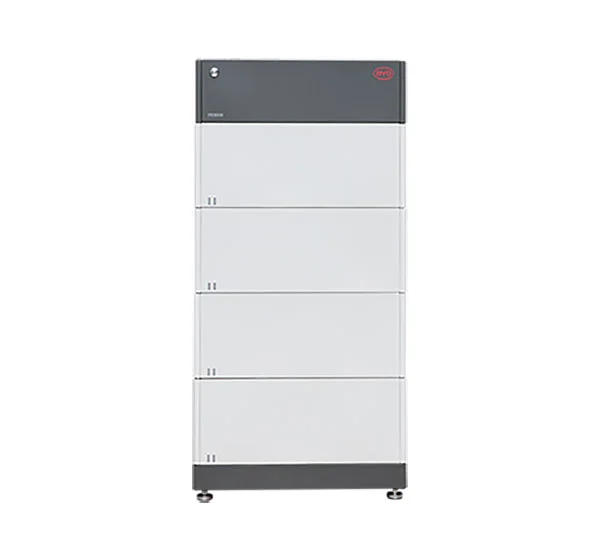
BYD Battery-Box Premium HVS
From CHF 6,500
- Capacity
- 5.1 to 22.1 kWh
- Chemistry
- LFP (Lithium Iron Phosphate)
- Warranty
- 10 years / 60%
- Cycles
- ≥ 6,000 cycles
Modular 2.56 kWh, compatible with Fronius, Sungrow, KOSTAL.
Category
Design, installation and grid connection. From residential to condominiums, with or without battery storage.
Open Smarter HomeCategory
Air-to-water, geothermal or water-to-water. Seasonal COP guaranteed at signing.
Open Smarter HomeCategory
Design-grade Daikin, Mitsubishi, Panasonic wall units. Quiet installation, permits handled.
Open Smarter HomeCategory
Store your solar production to use it in the evening. Consumption analysis, installation and 10-year monitoring.
Open Smarter HomeCategory
11 to 22 kW residential and fleet charging stations. Smart charging, driven by your solar output.
Open Smarter HomeCategory
Our projects in Western and German-speaking Switzerland, and a few of them in detail, backed by numbers.
Open Smarter HomeCategory
Practical guides, real costs and installer advice on energy in Western Switzerland.
See all articles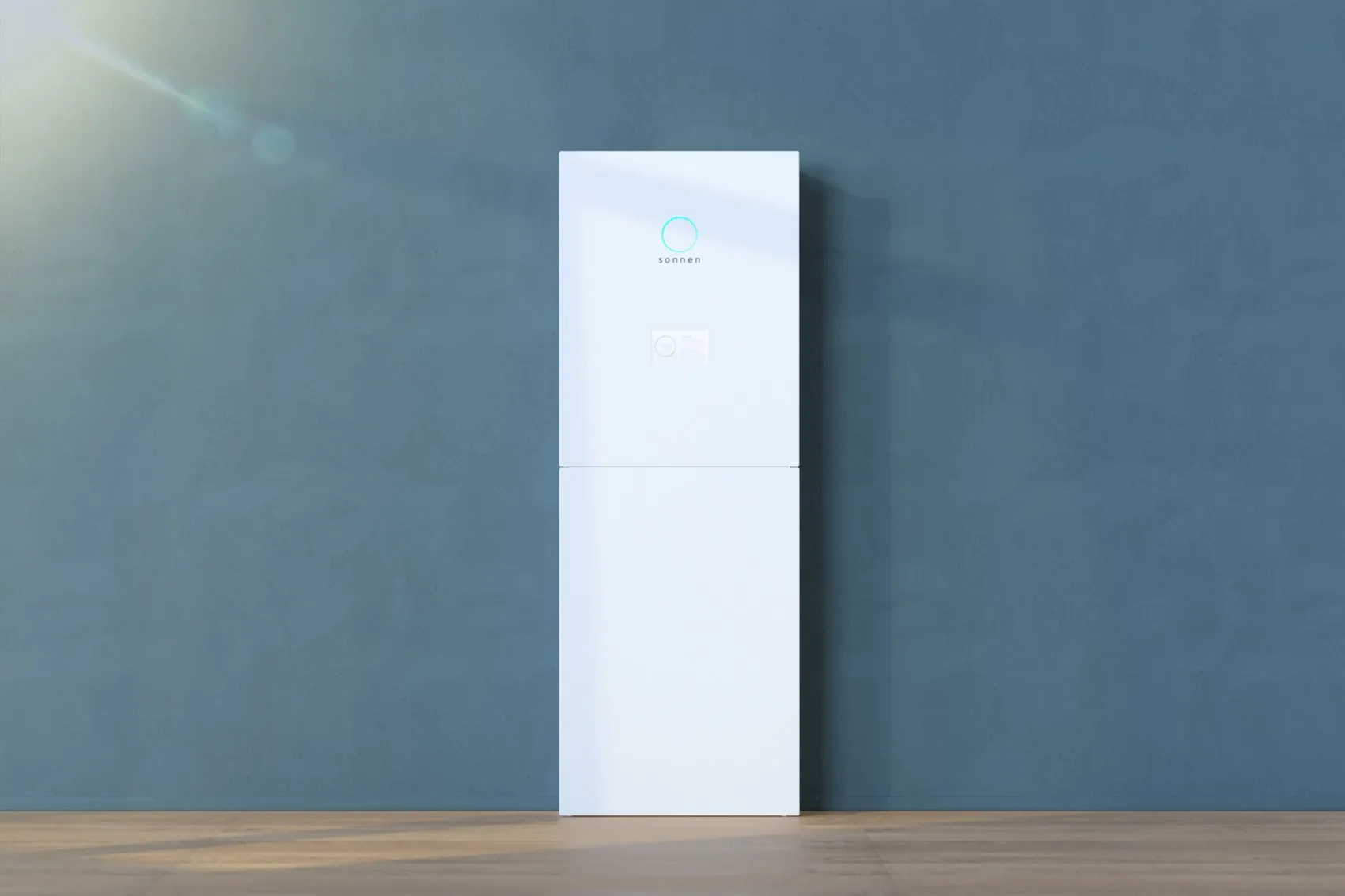
I.ON installs BYD, Huawei, Fronius and Enphase solar battery storage for homeowners and SMEs across Western Switzerland. Paired with your solar panel installation, a battery lifts your self-consumption from 30% to 70–80%. Consumption curve analysis, sizing, paperwork and 10-year monitoring handled by our in-house team.
Why store
A solar installation without a battery self-consumes on average 30% of its production. The rest is exported at the feed-in tariff (8–12 ct/kWh), while you buy back in the evening at the purchase price (26–32 ct/kWh). This gap is exactly what the battery captures.
With a 10 kWh battery on an 8 kWp installation, self-consumption rises to 70–80%. The extra saving is CHF 600 to 900 per year. Over 15 years, the cumulative gain exceeds CHF 10,000, which pays for the battery several times over.
Beyond financial return, the battery delivers three concrete things: independence from tariff hikes (electricity has risen by 27% on average in Switzerland since 2022), coverage of evening loads when solar production is zero, and, with the backup function, partial autonomy during a grid outage.
2026 comparison
Four brands selected for long-term reliability, compatibility with common inverters in Switzerland, and 10-year spare parts availability.
From CHF 6,500
Modular 2.56 kWh, compatible with Fronius, Sungrow, KOSTAL.
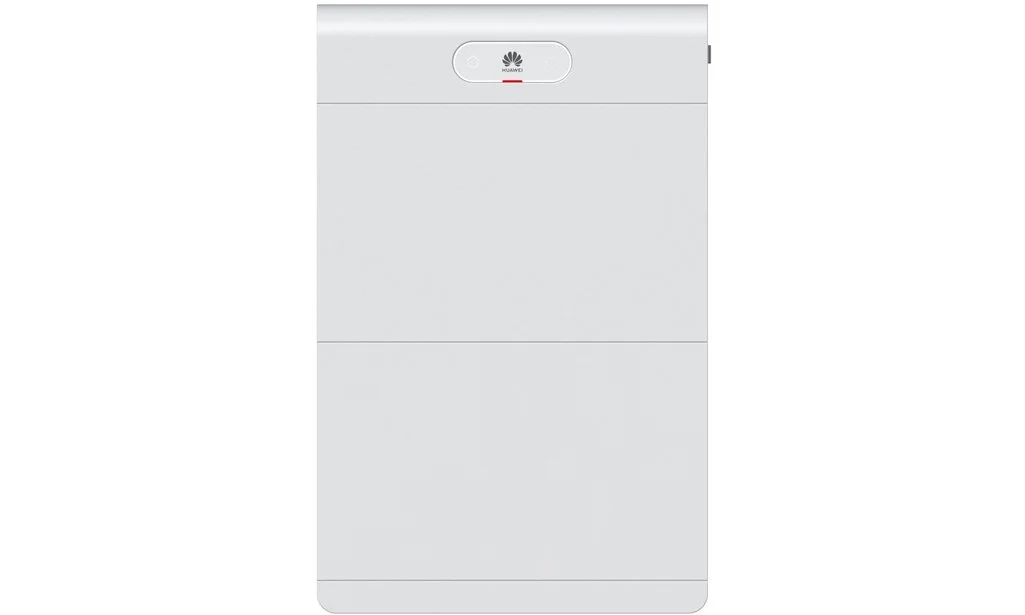
From CHF 7,000
Per-module optimisers, FusionSolar monitoring, three-phase redundancy.
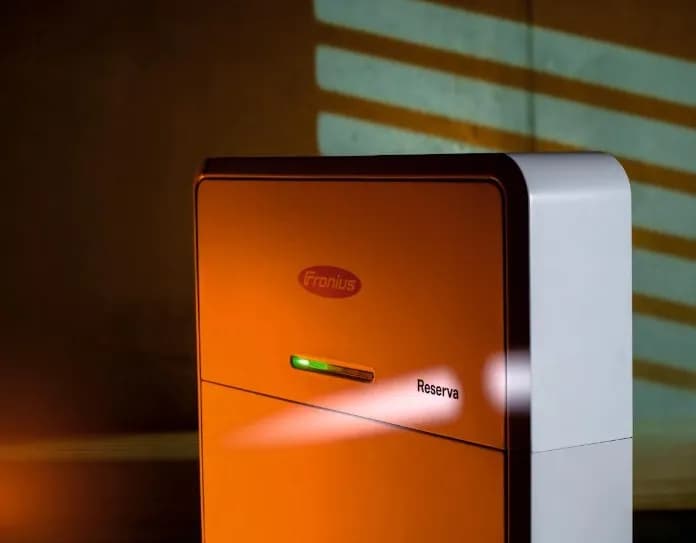
From CHF 8,500
Integrated inverter + battery, blackout backup function included.
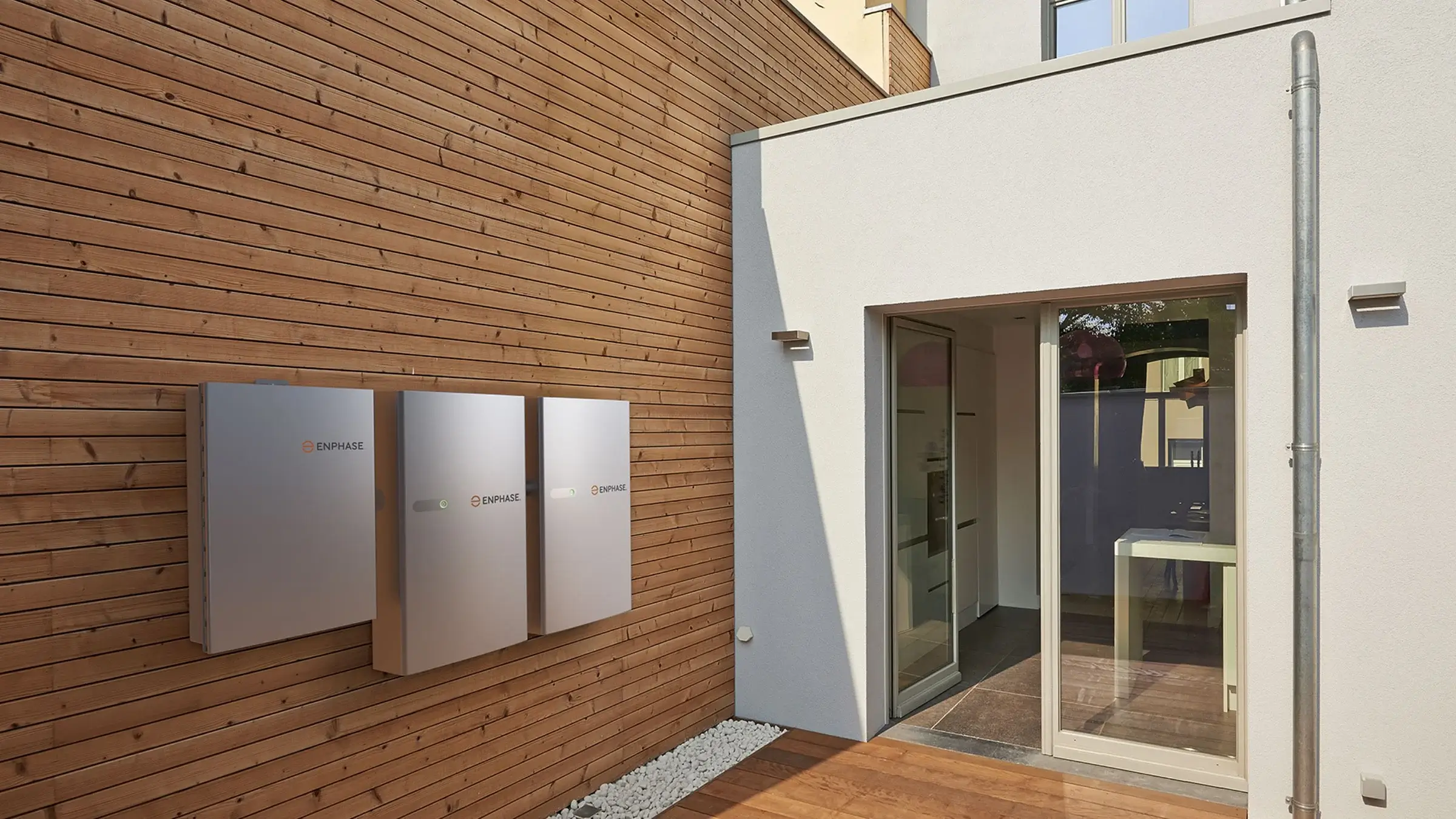
From CHF 5,300 (5 kWh)
5 kWh modules with 6 built-in microinverters. AC-coupled, it connects to any existing installation without replacing the inverter.
Sizing
Indicative figures. Final sizing comes after reading your hourly consumption curve provided by the grid operator.
| Profile | Consumption | Recommended capacity | Note |
|---|---|---|---|
| Apartment / small house | 2,500 to 3,500 kWh/year | 5 to 7 kWh | Target: cover evening and night consumption. |
| 4–5 room house | 4,000 to 5,500 kWh/year | 10 kWh | Recommended standard in Western Switzerland. Self-consumption 65–75%. |
| House with heat pump | 6,000 to 9,000 kWh/year | 13 to 15 kWh | Stores daytime PV surplus to power the heat pump in the evening. |
| Large house + EV charging | 9,000 to 15,000 kWh/year | 15 to 22 kWh | Pair with an 11 kW charger steered by the inverter. |
Our approach
Reading the hourly load curve provided by the grid operator (Romande Energie, SIG, Groupe E) over 12 months. Identifying evening / night / weekend power draws to size the battery precisely.
BYD, Huawei, Fronius or Enphase selection based on compatibility with your existing inverter and the need for backup capability. Argued recommendation, no imposed brand.
Notification to the grid operator, application for cantonal or municipal subsidy where eligible, verification of indoor installation rules (ventilation, clearance, accessibility).
Mounted in the utility room, basement or garage. High-voltage DC wiring, inverter connection, firmware commissioning. 1 to 2 days depending on configuration. Charge / discharge tests with the customer.
Mobile app included (Fronius Solar.web, BYD Be Connect, Huawei FusionSolar). Cycle tracking, state of health (SoH), anomaly alerts. Our team responds within 48 hours under warranty.
Grants and tax
No federal one-time payment for the battery alone. Payback comes from the tax deduction, cantonal premiums where available, and above all from the self-consumption gain.
No direct federal subsidy for the battery alone, but Geneva (éco21 programme), Fribourg and several Vaud municipalities (Lausanne, Nyon, Morges) offer a CHF 500 to 2,000 grant when the battery accompanies a new PV installation.
The net cost of the battery is 100% deductible from taxable income as an energy investment. At a 27% marginal rate, that's a CHF 1,800 to 3,500 tax saving on a 10 kWh battery.
If the battery is part of a broader project (PV + heat pump + insulation), a cumulative cantonal bonus can reach 15–30% of the total individual grants, depending on the canton.
With a battery, you export less to the grid and consume more of your production. At a feed-in tariff of 8–12 ct/kWh against a purchase price of 26–32 ct/kWh, this gap drives most of the battery's payback.
Customer reviews
“J'ai remplacé mon installation de chauffage au gaz par une pompe à chaleur air/eau et suis entièrement satisfaite du résultat. Toute l'équipe s'est montrée efficace, sérieuse, compétente et très sympathique. Les explications fournies étaient toujours claires, et chacun a pris le temps de répondre à mes questions avec beaucoup de professionnalisme. Les délais ont été parfaitement respectés, le prix est très intéressant au regard de la qualité du matériel installé, et la pompe à chaleur est à la fois performante et remarquablement silencieuse. Je recommande cette entreprise sans hésitation et adresse un grand merci à toute l'équipe pour son excellent travail !”
“Très bonne expérience. Nous avons fait installer des panneaux photovoltaïques avec batteries ainsi qu’une pompe à chaleur air-eau pour notre maison aux Monts-de-Corsier. Nous avons rencontré un petit problème au début du projet, mais ce qui nous a marqués, c’est la manière dont il a été géré : avec beaucoup de professionnalisme, de disponibilité, de flexibilité et un véritable sens du dialogue. Nous avons eu le sentiment d’avoir affaire à une entreprise qui privilégie le contact humain. Les échanges ont toujours été simples, directs et constructifs, avec une équipe présente, à l’écoute et soucieuse de trouver des solutions. Cela fait une vraie différence dans un projet de cette importance. Les équipes sur le chantier étaient très professionnelles et appliquées, avec le souci du travail bien fait. Au final, nous sommes satisfaits du résultat et remercions toute l’équipe pour son engagement tout au long du projet. Nous pouvons sans autre recommander cette entreprise.”
“Installation d'une pompe à chaleur en remplacement d'un potager à bois pour une villa achetée en 2025. I.ON a accepté de maintenir le prix du devis réalisé plus d'une année avant par la propriétaire précédente. L'ensemble des travaux a été effectué par une équipe très compétente et sympathique. Tout s'est bien déroulé dans les délais fixés. I.ON ne m'a pas laissé tomber lorsqu'il a fallu faire fonctionner les panneaux thermiques existants avec la pompe à chaleur via le régulateur pour tout automatiser.”
“Installation réalisée en décembre 2023. Avec le recul de plusieurs années de production : matériel conseillé de très bonne qualité (PV Longi HI-MO6 + onduleur triphasé SMA), simulation de production réaliste et même un peu pessimiste, système de pilotage SMA très ouvert et compatible. Avec deux véhicules électriques et 8,8 kWc installés, 60 à 70 % de mes besoins annuels en mobilité sont couverts par le solaire. Les contacts avec l'équipe ont toujours été très bons, avec des échanges constructifs sur des aspects parfois très pointus.”
“Pour le remplacement de notre chaudière à gaz, nous avons décidé d'équiper notre PPE de 8 appartements (24 personnes) avec pompe à chaleur et panneaux photovoltaïques. Entre les grands groupes peu intéressés et les PME du secteur sanitaire surtout actives sur les villas, seul I.ON a su nous écouter et proposer un équipement correctement dimensionné pour chauffer notre immeuble et produire 900 litres d'eau chaude sanitaire par jour. Mention excellente pour l'équipe interne : discrète mais très efficace dans ses relations avec les autorités cantonales et l'administration de notre PPE. Aucun copropriétaire n'a eu à subir de gêne pendant les travaux.”
“Expérience absolument excellente du début à la fin avec I.ON. Deux équipes sont intervenues : l'une pour l'installation photovoltaïque (panneaux solaires, batterie et borne de recharge pour voiture électrique), l'autre pour la pompe à chaleur, le réseau de conduites et les nouveaux radiateurs. Tout a été réalisé de manière rapide, efficace et avec une excellente qualité. Le service après-vente est tout aussi remarquable : à chaque question, nous avons toujours obtenu une réponse claire et rapide.”
“Nous avons fait installer une pompe à chaleur en décembre dernier. Les délais ont été bien respectés et l'exécution des travaux a été excellente. Nous avons également obtenu des réponses rapides à nos questions et nous ne pouvons que recommander cette entreprise.”
“Excellent travail avec un rapport qualité-prix imbattable : des travailleurs très consciencieux et compétents, un vendeur très sympathique et de bon conseil, une direction et un back-office sérieux. À recommander sans réserve dans la jungle du photovoltaïque.”
“Le conseil a été très professionnel et déterminant pour mon choix. L'offre claire, complète et concurrentielle prévoyait l'ensemble des travaux nécessaires au remplacement de mon chauffage à énergie fossile par une PAC, ainsi que les démarches administratives auprès de la commune et du canton pour permis et subventions. Aucune surprise ni coût supplémentaire. Couplé à une installation photovoltaïque également réalisée par I.ON, c'est une excellente solution tant écologiquement qu'économiquement.”
“Une expérience irréprochable ! Nous avons fait appel à cette entreprise pour le remplacement de notre chaudière à gaz et du boiler. Le travail est très professionnel : les délais ont été respectés et le devis initial a été parfaitement tenu. L'équipe sur place était non seulement agréable, mais aussi très discrète durant toute la durée du chantier. Le résultat est très satisfaisant et le nouvel équipement fonctionne à merveille. Je recommande vivement !”
“J'ai travaillé avec I.ON Energy pour mon installation solaire PV avec stockage. Lors de chaque phase de mon projet, l'accompagnement de l'équipe, du conseil initial jusqu'à la mise en service, a parfaitement répondu à mes attentes.”
“Je tiens à exprimer ma totale satisfaction concernant l'installation de notre pompe à chaleur air-air par la société I.ON. De la première prise de contact à la mise en service finale, l'expérience a été exemplaire. Leurs experts ont pris le temps d'étudier nos besoins spécifiques et nous ont proposé une solution parfaitement dimensionnée. La phase de mise en œuvre s'est déroulée avec une efficacité et un sérieux impressionnants. L'installation est non seulement performante, mais aussi esthétiquement très discrète. Aujourd'hui, nous profitons d'un confort thermique idéal, été comme hiver.”
“Au top du début à la fin. La personne responsable de notre projet fut très disponible, s'est déplacée à notre domicile afin de répondre à toutes nos questions. Leurs devis sont très complets, détaillés et en toute transparence. Excellente offre qualité/prix. Gestion du projet d'un grand professionnalisme. Travail effectué dans les délais prévus. Grande disponibilité après la mise en route. Nous recommandons à 100%.”
“La PPE a fait appel à I.ON pour le remplacement d'une chaudière à gaz. Respect des délais, prix compétitif et service de qualité. Merci I.ON !”
“Compétence, devis clair et tenu au franc près, délais respectés, mise en service sans problème.”
“Excellent travail, rapide, précis, délais respectés au top et de bons conseils. Je peux conseiller sans autre cette entreprise. Satisfaisante à 100%.”
“Excellente expérience avec I.ON ! Installation d'une pompe à chaleur et de panneaux solaires réalisée rapidement et avec un grand professionnalisme. Équipes sur place très sympathiques et efficaces. Nous sommes ravis du service !”
“Très bonne expérience avec I.ON Energy pour l'installation de notre pompe à chaleur. Un travail soigné, très professionnel et à l'écoute du client. Nous recommandons vivement cette entreprise.”
“Un grand merci à toute l'équipe de I.ON Energy pour l'installation de notre pompe à chaleur géothermique. Un commercial qui connaît le produit et qui a suivi l'intégralité de notre projet, c'était appréciable d'avoir un point de contact pour gérer les différents corps de métier (forage, installation de la sonde, chauffagiste, électricien, isolation, démarches administratives). Après l'installation, l'équipe continue à répondre aux questions et partage ses conseils.”
“Bon service, professionnalisme, réactivité quand on doit les joindre. Trouvent des solutions lorsqu'un problème imprévu arrive. Prix correct. Société fiable.”
“Une équipe réactive, professionnelle et compétente dès les phases d'études jusqu'à la mise en service de la PAC. Confronté à une situation atypique, des recherches ont été menées par I.ON pour trouver la solution adéquate à notre cas particulier. Je recommande vivement cette entreprise qui propose des solutions sur mesure et un suivi professionnel tout au long du processus.”
“Les travaux de forage et d'installation de notre pompe à chaleur géothermique se sont très bien déroulés et le matériel est de qualité. Les différentes étapes — forage, démontage de l'ancien système, installation, réglages — se sont enchaînées rapidement. Toutes les démarches administratives ont bien été gérées par I.ON Energy. En cas de questions sur le réglage, un numéro de téléphone est à disposition.”
“Une prise en charge très professionnelle avec un accompagnement et des explications claires et précises durant toute la durée des travaux. Toutes les équipes engagées ont été formidables et avenantes.”
“L'équipe I.ON a fait un excellent travail avec l'installation de notre pompe à chaleur. La préparation du chantier, l'exécution de chaque étape et enfin les vérifications d'éventuelles fuites et la pose de l'isolation, le tout en moins d'une semaine et sans la moindre complication. Nous sommes ravis.”
“Très satisfaits de la prise en charge et de la direction des travaux pour l'installation de la géothermie et de la PAC. Après les embûches administratives, très bien gérées par toute l'équipe, l'installation fonctionne parfaitement depuis quelques semaines. À noter que les devis ont été respectés à chaque étape. Merci à I.ON pour cette réalisation impeccable.”
“Projet PAC avec une pompe Daikin. Soigneusement préparé avec un planning précis pour les différents intervenants. Nous avons dû évacuer un chauffage à mazout et enlever les cuves : c'est aussi I.ON qui s'en est chargé. Le planning a été respecté à 100% par une équipe bien rodée et très motivée. Travail excellent et propre — le chantier était nettoyé chaque jour. Nous avons eu une formation détaillée sur le fonctionnement de l'installation. C'est avec plaisir que je recommande la maison I.ON.”
“I.ON a fait une offre adaptée et compétitive pour le remplacement de notre pompe à chaleur. Les travaux ont été effectués rapidement et soigneusement. Nous ferons certainement appel à leurs services pour d'éventuels travaux futurs.”
“Nous avons été très contents du travail accompli par I.ON Energy pour installer notre pompe à chaleur en août 2023. L'équipe avait bien travaillé et avait tout mis en marche dans le délai anticipé. Les techniciens nous ont bien expliqué le fonctionnement de la PAC. Nous recommandons sans hésitation.”
“I.ON s'est occupée de toutes les démarches administratives. Le devis et le planning d'installation ont été entièrement respectés. L'installation a été réalisée en trois jours plus un jour pour la mise en service et mon instruction : le sixième jour tout était opérationnel. I.ON s'est révélée une entreprise professionnelle, compétente et fiable. Son personnel est efficace, bien rodé et d'agréable contact.”
“Entreprise sérieuse et très compétente, travail propre et personnel de contact serviable et poli. Nous avons fait installer une PAC et le travail a été fait avec beaucoup de professionnalisme, merci à l'équipe très sympathique. Nous sommes ravis du résultat obtenu.”
“En juin 2023, I.ON a réalisé une installation photovoltaïque sur le toit de notre maison, complétée par une batterie au sous-sol en septembre. Les prestations étaient excellentes. Nous sommes très contents avec le choix des panneaux, du système de montage, de l'onduleur et de la batterie. Le travail a été fait avec soin et dans les délais. Le système est bien dimensionné et la performance est dans les attentes. Compétence technique remarquable du chef de projet, qui a suivi de près le projet du début à la fin.”
Frequently asked
Another question on battery storage, inverter compatibility or lead times in Western Switzerland? Our team replies within 24 hours.
A battery storage system installed by I.ON starts at CHF 6,500 for 10 kWh (BYD Battery-Box). A Huawei Luna 2000 or a Fronius Reserva of equivalent capacity ranges from CHF 7,000 to CHF 9,000, installation included. The price depends on capacity, brand and compatibility with your existing inverter.
Without a battery, a household self-consumes about 30% of its solar production. With a battery, that figure rises to 70–80%. For an 8 kWp installation in Western Switzerland, the extra saving is CHF 600 to 900 per year. The payback period of a battery is 8 to 12 years depending on your supplier's electricity rate.
For a 4–5 room house consuming 4,000 to 5,500 kWh per year, a 10 kWh battery is recommended. It covers evening and night consumption. For a house with a heat pump or an EV charger, scale up to 13–15 kWh. I.ON sizes the battery based on your actual consumption curve (12-month meter reading).
Yes, in most cases. If your inverter is compatible (Fronius, SolarEdge, Sungrow, Huawei, KOSTAL), the battery connects directly on the DC or AC side depending on the topology. Otherwise, an AC-coupled battery such as the Enphase IQ Battery 5P connects without touching the inverter, or the inverter is replaced. I.ON assesses compatibility during the free study and proposes the most cost-effective solution.
The LFP (Lithium Iron Phosphate) batteries installed by I.ON have a lifespan of 12 to 15 years, or 6,000 to 10,000 cycles. The manufacturer warranty covers 10 years (15 years for Enphase) with a minimum residual capacity of 60 to 70%. Beyond that, the battery keeps running with reduced capacity, with no safety risk.
Only if the installation includes the backup function (Fronius Reserva by default, Huawei and BYD optional with a dedicated module, Enphase with the IQ System Controller). Without backup, the battery is disconnected from the grid for safety reasons during an outage. With backup, you retain 5 to 15 kW of autonomy on prioritised circuits.
More questions? All our answers (timelines, warranties, subsidies) are in the full FAQ. And to check that we operate in your area, browse our regions of operation in Western Switzerland.

Free quote
On-site visit, consumption analysis, detailed cost simulation. Full quote delivered within seven days. If your project is not technically or financially viable, we tell you straight.

Watt
I.ON assistant
AI assistant — it can be wrong. For a quote, an advisor takes over.